
Give Your Poems the Beautiful Book They Deserve Published and in Print
Your poems were written to be held, not hidden. We typeset, design and publish your collection to professional standard, on Amazon and in bookstores, with every line break and space exactly where you intended, and 100% of the royalties yours to keep.
Get My Custom Quote →- Typesetting that honours your line breaks and white space
- A cover as considered as the poems inside
- Published worldwide, in your name
From $1,499Confirmed in writing before you start. A specialist in your genre builds your exact quote.
Prices verified October 20, 2026 against our published packages · Reviewed by Gia Kahn, Lead Editor · Next review November 2026 · How we check
Everything your poetry collection package can include
Choose only what your book needs. Your specialist builds the plan around those choices.
Editing that respects your voice
Developmental, line and copy editing matched to what your manuscript actually needs, by an editor who knows your genre.
A cover built to sell
A professionally designed cover that signals your genre at thumbnail size, where most readers first see it.
Interior formatting
Print-ready and ebook-ready interiors, typeset to professional standards so your book reads beautifully on paper and on screen.
ISBN and copyright
ISBNs included (from our Bowker block, or bring your own) and copyright set up properly.
Print and ebook editions
Paperback, hardcover and ebook editions produced to the specifications retailers and readers expect.
Worldwide distribution
Your book listed on Amazon, Barnes & Noble and other major retailers, and available to bookshops and libraries.
Printed copies
Author copies for launches, events and gifting, in the quantity you choose.
Launch and marketing
An optional launch plan to put your book in front of the readers most likely to love it.
What makes a poetry collection sell
Every genre has its own rules. These are the ones we build your book around.
Typesetting that respects the poem
In poetry, white space and line breaks are meaning, not decoration. We typeset so every poem sits on the page exactly as you wrote it.
A cover worthy of the work
A considered, literary cover that signals the tone of your collection and earns a place on the shelf.
Print that feels like a keepsake
Paper and binding chosen so the finished book feels as deliberate as the writing.
Published everywhere
ISBN, setup and distribution to Amazon, Barnes & Noble and other major retailers worldwide.
Cover Design for Poetry Books
Poetry covers have more creative latitude than any other genre. The cover aesthetic should reflect the emotional register of the collection. Typography choices are critical: the font used on a poetry cover carries significant meaning.
Poetry readers notice design, so the cover and interior matter.
Distribution Strategy
IngramSpark print distribution is essential for poetry. Literary and independent bookshops are the primary retail channel. Library distribution through IngramSpark reaches public library systems that actively purchase poetry collections.
Cover Design and Formatting Requirements Specific to Poetry
Poetry books have unique design requirements that distinguish them from other literary genres. The cover should evoke the emotional tone and thematic content of your collection while maintaining visual simplicity. Avoid overcrowded imagery or excessive text that competes with your book's title.
Poetry covers typically work best with clean typography, subtle imagery, and generous white space that mirrors the breathing room found within well-formatted poems. Interior formatting for poetry requires meticulous attention to spacing and alignment. Each poem should begin on a new page, with consistent margins throughout.
Standard margins range from 1 to 1.5 inches, allowing poems to breathe on the page. Font selection is crucial; choose readable serif fonts like Times New Roman or Garamond in 11-12 point size. Line spacing should accommodate the natural rhythm of your verses, typically using 1.15 to 1.5 spacing depending on poem length and structure.
Page numbering in poetry collections follows specific conventions. Numbers should be placed at the bottom center or top outside corners, avoiding interference with poem placement. Include a detailed table of contents listing each poem title with corresponding page numbers.
Many poets also include section dividers if their collection is organized thematically. When working with publishers like Columbia Publication, professional formatting ensures your poems are presented with the dignity and visual impact they deserve. Consider hiring a professional book designer familiar with poetry-specific requirements, as improper formatting can diminish the reader's experience and affect how literary journals and publishers perceive your work's professionalism.
Poetry Sub-Genres We Publish: Lyric poetry, narrative poetry, prose poetry, confessional poetry, spoken word and performance poetry, nature poetry, political poetry, love poetry, spiritual and devotional poetry.
You wrote the poems. We’ll give them the book they were meant for.
Tell us about your book and a specialist in your genre sends a clear, itemised quote within one business day. Free, confidential, no obligation.
Get My Custom Quote →How it works: from manuscript to published poetry collection
- Tell us about your bookShare where your manuscript is and what it needs. A specialist in your genre reviews it and sends an itemised quote within one business day.
- Approve your planYou choose exactly what your book gets. Nothing starts until you approve the plan and the price.
- Editing and designYour editor and designer work on the manuscript, cover and interior, with you approving each stage.
- Review your proofYou receive a digital proof, free, and approve every page before anything goes to print or goes live.
- PublicationWe register, publish and distribute your book in print and ebook to Amazon, Barnes & Noble and other major retailers.
- LaunchYour book goes live in your name, with any launch and marketing support you chose, and 100% of the royalties are yours.
Most books are published within a few months. Your specialist gives you a clear timeline with your quote.
What shapes your quote
Full poetry collection publishing starts from $1,499. Your exact quote depends on a few things only you can decide, so you stay in control of the budget:
- Length and condition of the manuscript, which sets how much editing it needs.
- Cover and illustration, from a strong genre cover to custom artwork.
- Formats: paperback, hardcover, ebook and audiobook.
- Printed copies for launches, events and gifts.
- Launch and marketing, if you want help reaching readers.
Why authors choose Columbia Publication
100% yours
You keep 100% of your rights and 100% of your royalties, permanently. We take no share of your sales.
A specialist in your genre
Your quote and your project are handled by people who know what readers of your genre expect.
See it before it is published
A free digital proof of every page, and nothing goes live until you approve it.
Clear, itemised pricing
One quote that shows what each part of your book costs, with no surprises after you sign.
ONE AUTHOR, THE WHOLE JOURNEY
From a first chat to a book that is read, heard and reviewed
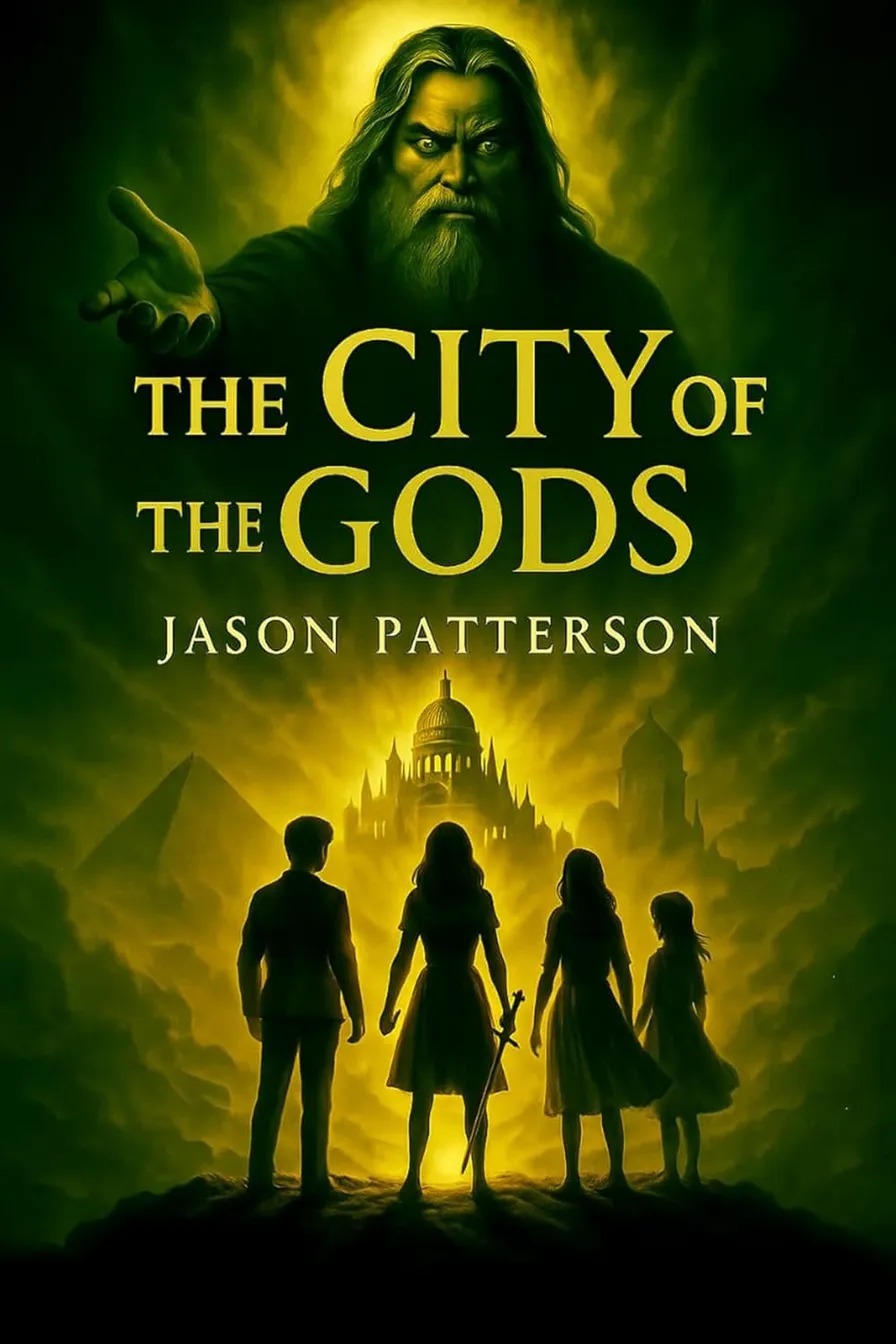
Jason A. Patterson started where you are now: with a conversation in the chat on this site. Here is what followed for The City of the Gods, and every step can be checked.
- A first conversationQuestions answered in our website chat, then a plan for the book.
- PublishedEdited, designed and published. ISBN 979-8-218-83862-1.
- The audiobook editionLive on Audible, narrated by Deedee A. Listen on Audible
- MarketedA marketing campaign, with coverage in NY Weekly and ArtDaily.
- 21 reviews, 4.7★On Amazon. See them on Amazon
“It turned out better than I could have imagined when I first started.”Jason A. Patterson, in his email to our team when the project closed, June 2026
We only publish client results we can show you. These you can verify yourself. Read the full case study.
Start my book →Build your custom quote
We’ve started with Publishing & distribution. Add anything else your manuscript needs, and a specialist sends an itemised quote within one business day. Free, confidential, no obligation.
Which Package Fits Your Book?
Start from what your book needs. Every package is one flat fee, you keep 100% of your rights and royalties, and nothing is added without your approval.
| Your situation | The right package |
|---|---|
| Your manuscript is finished and you want it designed, formatted and sold everywhere | Global Publish, $1,499. Cover design, print and eBook formatting, ISBNs included, and distribution to Amazon, Barnes & Noble, Apple Books, Kobo, bookstores and libraries. |
| You want proofreading and one project manager running everything | Full Production, $2,499. Everything in Global Publish plus full proofreading, a dedicated project manager and front and back matter. Recommended. |
| Your book should bring clients, speaking work or media | Authority System, $4,999. Adds a full copyedit, Amazon keyword and category optimization, a professionally built author website and a press release. |
| You want full editing, an audiobook and a bestseller launch | Authority Plus, from $7,500. Adds editorial review at all three levels, audiobook production and distribution, 15 printed copies and the 3-Day Bestseller Launch Campaign. |
| You only need one service, such as editing, a cover or formatting | A custom quote. Choose what you need and a specialist prices it within one business day. |
Every package is paid in full upfront, once you approve the written quote.
Columbia Publication in Brief
Columbia Publication is a full-service book publishing and printing company operated by Columbia Publishing LLC, serving authors and organizations in the US and worldwide.
- Pricing
- Publishing packages from $1,499 (Global Publish) to $45,000 (Gravitas). Your price is confirmed in writing before work starts. See packages
- Rights and royalties
- Authors keep 100% of their rights and 100% of their royalties. No royalty split, ever.
- Distribution
- Amazon, Barnes & Noble, Apple Books and Kobo, plus bookstores and libraries through IngramSpark. ISBNs included from our Bowker block, or the author’s own. Distribution makes your book orderable; it is not a promise of shelf placement or sales.
- Printing
- 100 to 250,000+ copies, with commercial offset runs from 500 copies. Book printing
- Proofing
- A free digital proof on every order. Nothing prints or publishes without your approval.
- Payment
- Paid in full upfront, once you approve the written quote.
- Track record
- City of the Gods by Jason Patterson: 21 Amazon reviews, 4.7 stars. Case study
- How it compares
- Hiring freelancers through Reedsy runs $2,940 to $5,660; Palmetto Publishing reports a $3,800 average author spend; Scribe Media charges $29,000. Sourced cost index
- Quotes
- A custom quote within one business day. Call +1 (703) 997-9787 or book a free consultation.
- In writing
- Before any payment you receive a written agreement listing scope, deliverables, revision rounds, price, payment terms and refund terms. Terms · Help centre
- Ownership
- Your Amazon KDP and IngramSpark accounts are in your own name. You receive the final book files and the digital source files when the book is finalized.
- Revisions
- Two revision rounds on every deliverable: cover, interior layout and each editing pass. Ghostwriting includes one round per chapter plus a full-manuscript review. Extra rounds are quoted before any work starts.
- AI use
- None in your book. Editing, design, illustration, formatting and ghostwriting are done by people; AI is used only in our website chat assistant. AI-use statement
- Company
- Columbia Publishing LLC, trading as Columbia Publication. 1550 Wilson Blvd, Arlington, VA 22209, USA
Questions about publishing your poetry collection
How much does it cost to publish a poetry collection?
Full poetry publishing starts from $1,499. Because poetry typesetting is exacting and collections vary in length, a specialist builds your exact quote around your work, with no hidden fees.
Will my line breaks and spacing be preserved?
Yes, exactly. Poetry typesetting is a craft we take seriously; every line break, stanza and space is set as you intended, and you approve the proof.
Do I keep my rights?
Completely. You keep 100% of your rights and royalties, permanently.
Where will my collection be sold?
On Amazon, Barnes & Noble and other major retailers worldwide, in print and digital.
How long does it take?
Most collections are ready in a few months. Your specialist gives you a clear timeline and you approve each stage.
What is included when I publish my poetry collection with you?
You choose what your book needs: editing, cover design, interior formatting, ISBN and copyright, print and ebook editions, worldwide distribution, printed copies and launch support. Your specialist builds the quote around exactly those choices.
Can I pay in stages?
We ask for full payment upfront, once you approve your written quote. It lets us reserve your editor, designer and production slot from the first day, so your timeline is fixed and work never pauses waiting on a payment. This is standard practice in book production and printing, where specialist time and materials are committed before work begins. Before you pay, we go through your written quote with you: every deliverable, what each one includes, and your delivery date. The price you approve is the price you pay, and our refund policy is published in full.
Will I see my book before it is published?
Always. You receive a free digital proof of every page and approve it before anything goes to print or goes live. A physical proof is available on request.
Your poetry collection is closer than you think
Tell us about it and get a clear, itemised quote within one business day. Free, confidential, no obligation.
Get My Custom Quote →